What is Spinal Energetics and how can it help?
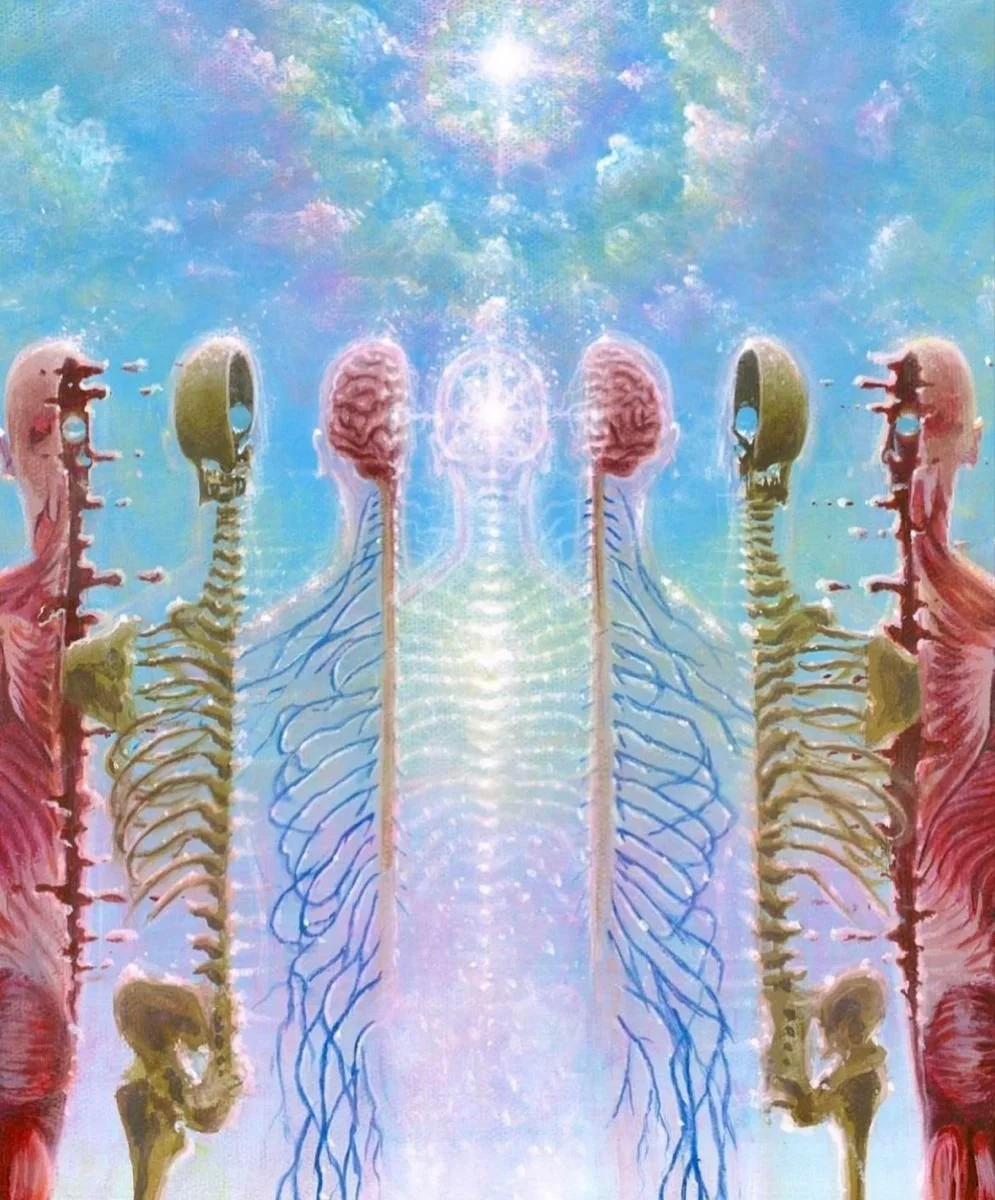
Spinal Energetics is a gentle, non-cognitive and non-verbal somatic and energetic practice that works primarily through the spine, nervous system, body awareness, and energetic field. It draws from contemporary understandings of the nervous system alongside traditional Eastern philosophies, creating a space where the physical, emotional, mental, spiritual, and energetic dimensions of our experience can be explored together.
We explore the areas where you notice tension, resistance, bracing, or recurring patterns of sensation and dis-ease. By bringing attention and energy to these places without forcing them to change, you may begin to experience them differently: noticing sensations and emotions beneath, allowing movement or stillness to arise, and softening tension patterns that may have become habitual and unconscious.
Rather than attempting to force a “release,” Spinal Energetics invites the body to explore and reorganize its relationship with what is present. Through increased awareness and the intention to feel, we may become more familiar with our patterns of protection, resistance, and adaptation. This can open space for new ways of relating to our bodies, emotions, thoughts, relationships, and life itself.
How it Works
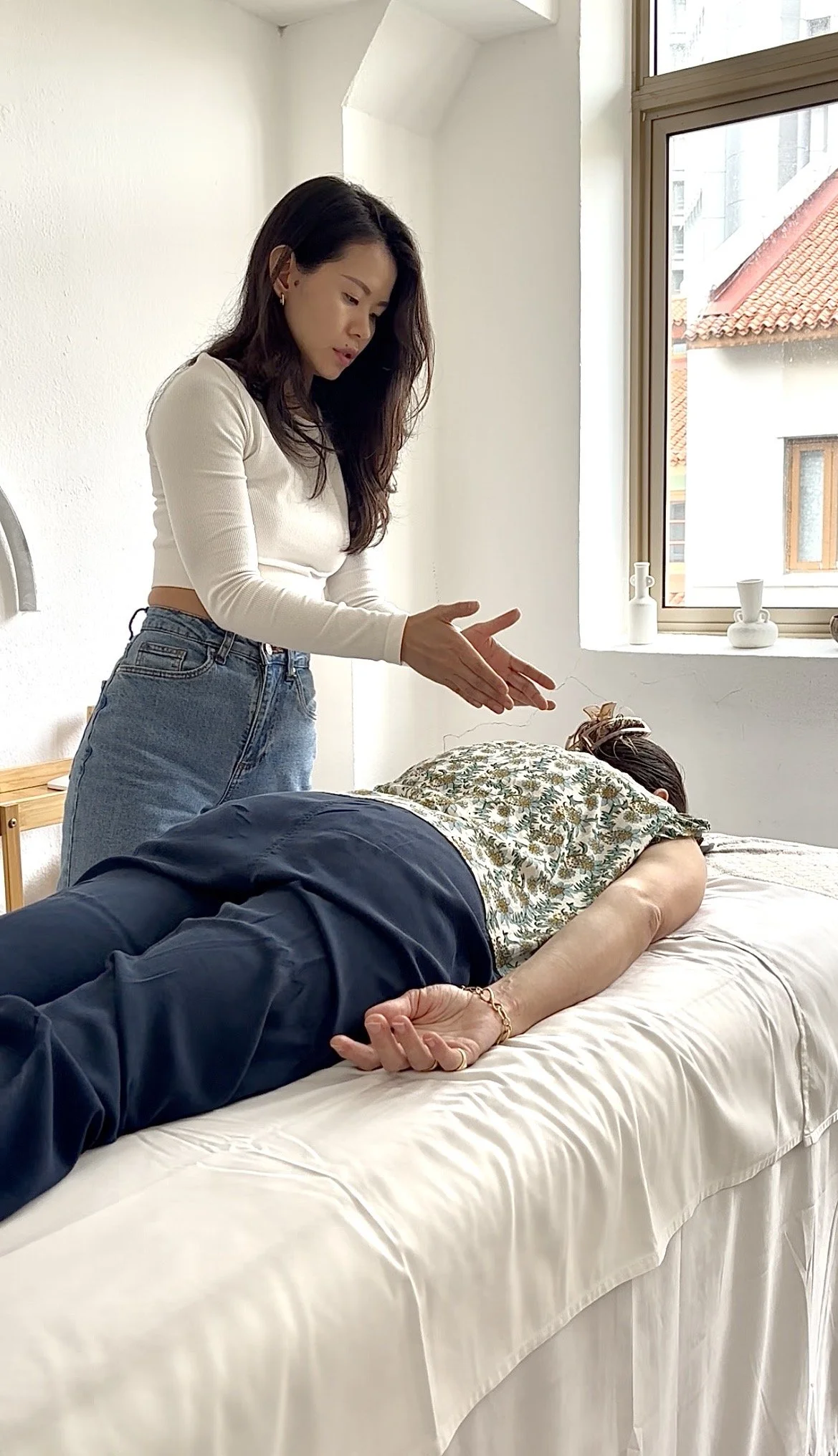
Rather than diagnosing, analyzing, or asking you to work through an experience or symptom intellectually, Spinal Energetics invites you to become more deeply aware of what is already present within you. Through low-force, non-contact or minimal-contact techniques, including distant work, we engage with the areas of the spine that feel most resonant, responsive, and available in the moment. The intention is not to make the body do something, but to create the conditions for it to respond in its own way. The response varies from person to person and from session to session. Sometimes it may be as subtle as frequent yawning, sighing, or changes in breathing. At other times, it may show up as emotional expression, twitching, trembling, spontaneous movement, or an impulse to stretch or shift position. These spontaneous expressions are part of the body's natural way of responding to changes in sensation, attention, arousal, and internal state as it moves towards greater regulation and balance.
We meet the body where it is and allow it to lead the process rather than imposing a predetermined outcome.
Nothing to Add or Remove
Unlike some energetic approaches that work by adding to, removing from, or altering what is perceived to be within a person's energetic field, Spinal Energetics does not seek to put anything into or take anything out of your biofield, nor do we channel any category of energy into you or the session.
The work is centered on bringing awareness, energy, and connection to what is already present and allowing your own system to respond in its own way. The facilitator does not make the body heal or determine what your process should look like. We create the conditions, offer attention and support, and allow your experience to unfold at its own pace.
A Wider Field of Experience
For those who engage with the spiritual and energetic dimensions of the practice, Spinal Energetics can also become a pathway for exploring questions of consciousness, meaning, connection, and our relationship with something beyond and greater than ourselves. For example, in Spinal Energetics Level 2, we start working with the ancestral energy layer. In this sense, the work may support a deeper sense of authenticity, self-trust, and connection with life.
The spiritual dimension is simply another layer of human experience that naturally opens up at its own time.
From Thinking to Feeling
The sessions are intentionally not centered around cognitive processing or verbal exploration. While conversation can be deeply valuable, there are times when continually talking about, analyzing, or trying to understand an experience intellectually may not be the most useful way forward.
For some people, particularly those who have spent considerable time in their headspace, conventional talk therapy or other cognitive approaches, a somatic and non-verbal approach can offer another avenue for accessing their experience without having to find the right words or construct the right narrative.
This does not mean that Spinal Energetics replaces therapy, nor is a session intended to become or resemble a therapy session. It is not within my scope to diagnose, interpret psychological conditions, or provide therapeutic talk. My role is to facilitate the somatic and energetic process, not become prescriptive by determining what an experience means, or deciding what you should be healing.
Leaving Room for Your Own Knowing
At the same time, I do not offer intuitive readings or attempt to tell you what I perceive about your energetic field. This is partly because I do not perceive information in that way, and I intentionally prefer to keep the work more grounded and embodied. When experiences, sensations, emotions, memories, beliefs, or perspectives arise, I will refrain from interpreting them for you or forming a particular narrative. I firmly believe that the more empowering way is to develop your own relationship with what arises and practice your own discernment. Here, my intention is to support you in developing greater trust in your own body, inner knowing, and capacity to make sense of your experience.
Remember, healing can become limiting when an external practitioner becomes the authority on what your experience means. Premature meaning-making before the felt experience has had room to unfold on its own terms tends to create several problems such as:
Interrupting a process by pulling attention out of direct bodily experience and back into narrative.
Risks imposing the practitioner's bias or frame instead of the client's.
Bypassing the real and harder work of actually feeling something through and metabolizing it.
Weaken the client's trust in their own perception if they come to rely on the practitioner to tell them what their experience means.
Important to Know
Spinal Energetics is a complementary wellness practice, not a substitute for medical, psychological, psychiatric, or healthcare. It is non-diagnostic and does not claim to diagnose or treat medical conditions or psychiatric disorders.
It can exist alongside appropriate physical and mental healthcare and may complement other forms of support as part of a broader approach to wellbeing. Strong foundations such as adequate rest, nourishment, movement, supportive relationships, and appropriate professional care remain important.
If you are experiencing symptoms or concerns that require professional assessment or treatment, please seek appropriate care from a qualified healthcare professional.

Healing is a Self-Directed Journey
While I can offer a space, facilitate the process, and support you in developing a deeper relationship with your body and experience, I do not determine how far you should go, what your healing should look like, or dictate how often you should return.
Hence, I do not actively probe clients about booking their next session or routinely check in between sessions to encourage them to return. There may be times when I offer a practical recommendation based on something that arose during our work together, but the decision to continue is always yours.
I believe this is an important part of maintaining healthy boundaries and supporting autonomy. The intention is not to create dependence on a facilitator, but to help you develop greater trust in your own capacity to feel, discern, respond, decide what’s right for your needs, and care for yourself.


Feeling lighter and calmer overall
Heightened inner sense of spaciousness
Reduced physical discomfort and symptoms
Enjoying an increased range of motion
Experiencing improved sleep quality
Gaining mental clarity and confidence
Feeling more energized and accessible
Decreased reactivity, anxiety, irritability, and depression
Ability to slow down and reduce feeling wired
Being more present and connected in daily life
Finding it easier to implement positive lifestyle changes
Improved self-regulation and ability to navigate challenges
Becoming more open, passionate, and optimistic
Increased curiosity and decreased resistance to the unknown
More sense of empowerment, wonder, and gratitude
Common Benefits of Receiving Spinal Energetics
Nervous System:
Calmer baseline state
Improved ability to self-regulate, breathe through heavy emotions, handle higher-stress situations, and stay present.
Greater nervous system resilience (less freeze/shutdown response and the ability to move out of it)
Reduced reactivity, wider window between trigger and reaction
Deeper, more restful sleep
Falling asleep earlier and more easily
Better sleep quality for several days or weeks post-session
The Shifts Experienced By My Clients:

Physical:
Reduced chronic pain and tension, and migraines
Lightness and spaciousness in the body
Deeper, fuller breathing and improved lung expansion
Reduced PMS and period cramps, cycle regulation in some cases
Better digestion, more regular bowel movements
Reduced intensity or faster recovery for flare-ups
Feeling less constricted in the throat
Emotional:
Increased self-kindness, self-acceptance, and self-love
Reduced self-judgment and fewer negative thought patterns
Greater emotional resilience, curiosity, and bandwidth during stressful situations or uncertainty
Less anxiety, including reduced travel-related fear, fear of heights, and social judgments
Improved ability to sit with intense or uncomfortable feelings without shutting down
Less heaviness in the heartspace; more vibrancy and positivity
Holding fewer grudges, more appreciation, and gratitude
Greater capacity to internalize and process emotions
Reduced rumination or obsessional thoughts (e.g., past relationships)
Mental:
Clearer thinking and reduced brain fog
Increased mental spaciousness
Improved presence and attentiveness with others
Better reframing of negative situations
More awareness of stress triggers and emotional patterns
Greater curiosity toward previously triggering events
Stronger trust in oneself and personal capacity
Increased decisiveness and direction
More focus on personal priorities and openness (with some recurrence in certain cases)
Energetic:
Increased overall energy levels
Less sluggishness and reduced reliance on caffeine
Greater sense of flow and creativity
Feeling lighter beyond the mind and body
Personal:
More vocal in expressing opinions and needs
Greater confidence in being authentic
Less worry about others’ opinions or being misunderstood
Improved communication and meaningful connection with people
Finding it easier to choose personal rest and needs over external expectations
Increased action-taking (e.g., starting a business/new endeavors, refocusing life priorities, changing habits)
Greater ability to handle stress and abnormal challenges
More flow between desire and action rather than obligation
Increased appreciation for life experiences
Spiritual:
Heightened intuition
Stronger connection to a Higher Power, nature, and the world
Feeling more grounded and at peace even in tougher times
Increased attunement to body awareness without hyper-fixation
Greater sensitivity to subtle or different dimensional experiences
Expanded curiosity about life, self, trauma healing, and mind-body-soul integration
THE SEVEN MAJOR CHAKRAS WE WORK WITH IN THE BEGINNING

The basic substance of a person is energy. Our physical body comprises two parts: the visible body and the unseen energy body.
Energy, often referred to as 'Prana' in Ayurveda or 'Qi' in traditional Chinese medicine, sustains and nourishes our physical being, ensuring vitality and health. The smooth circulation of this life force enriches our existence. In ancient philosophies like Ayurveda and traditional Chinese medicine, disruptions in the flow of this energy are seen as the root cause of ailments, presenting as blockages, deficiencies, excesses, or a combination thereof within the energetic framework of the body.
The term "chakra," originating from ancient Sanskrit, denotes a "spinning wheel of light" and has its roots in the Vedic scriptures of India. Though initially mentioned in Hindu texts, similar energy systems are acknowledged and referenced by diverse cultures, including Buddhists, Tibetans, Mayans, and Kabbalists.
The chakra system comprises a network of channels housing various energy centers. While there exist numerous chakras, we focus on the seven major ones, which align on the axis from the base of the spine to the crown of the head.
These main chakras are electromagnetic vortices that take in and redistribute subtle life force energy in and around the body, energizing and regulating bodily functions. Each chakra is associated with the nerve bundles, organs, or glands in the particular area in which it is located. Besides affecting the physical functionality of that region, they may also influence an individual’s emotional, psychological, and spiritual state.
-
Represents one’s relationship with all life, oneness, bliss, intelligence, and consciousness.
Function: Wisdom, information, awareness.
Key body connections: Brain, nervous system, hair, skin and nails.
Physical symptoms: Poor coordination and imbalance, neurological issues, anxiety, brain fog, amnesia, cognitive delusions, sensitivity to light, sound, and environment.
Metaphysical symptoms: Issues with self-knowledge and greater power, rigid belief systems, manipulation, disassociation of body, spiritual addiction or bypassing, confusion, carrying prejudices, analysis paralysis, alienation, disinterest in living, learning disabilities, apathy, self-isolation, and depression.
-
Represents intuition, imagination, insight, perception, and awareness.
Function: Seeing, intuition, clarity
Key body connections: Eyes, pineal gland, brain, and ears.
Physical symptoms: Neck tension, dizziness, vision and sinus issues, hearing loss, hormonal issues, headaches, insomnia, wired but tired.
Metaphysical issues: Dominant in the headspace, unable to control thoughts, obsessive thinking, low quality of sleep, sympathetic dominance, sympathetic dominance, type A personality, procrastination due to perfectionism, high achiever, difficulty switching off, difficulty seeing the future, lack of imagination, unable to plan or set goals, inability to look at one's fears and learn from others.
-
Represents expression, trust, and truth.
Function: Communication, gratitude
Key body connections: Neck, shoulders, upper thoracic, thyroid, parathyroid glands, tonsils, vocal cord, esophagus, trachea, and epiglottis.
Physical symptoms: Throat conditions, frequent colds, TMJ, frequent colds, thyroid issues, hearing problems, ear issues.
Metaphysical symptoms: Issues with self-expression and speaking up, excessive lying, feelings of uncertainty around identity, trouble voicing wants and needs in a transitional stage or phase of life, questioning the meaning of everything, and feeling stuck.
-
Represents unconditional love, compassion, freedom, and forgiveness.
Function: Compassion, love
Key body connections: Heart, lungs, arms, and hand.
Physical symptoms: Tension felt in upper and/or mid-back, unbalanced or shallow breath, stomach/gut upset, chest conditions, kidney/urinary problems, asthma, and blood pressure issues.
Metaphysical symptoms: Poor emotional boundaries, fear of rejection, relationship pain, heartache, overwhelmed with responsibility, grief, sadness, closed off to self and/or others, emotionally unavailable and/or anxious, emotionally numb, feelings of loneliness and yearning for connection.
-
Represents self-worth, self-esteem, and willpower: the ability to be brave and self-responsible.
Function: Will, assertiveness
Key body connections: Digestive system, liver, spleen, stomach, small intestine, pancreas, and adrenals.
Physical symptoms: Lower back issues, digestive problems, muscle weakness, stomach ulcers, diabetes, liver issues, pain or numbness in legs, circulation issues, and bladder disruption.
Metaphysical symptoms: Poor self-esteem, perfectionism, egotism, lack of support, instability, uncertainty, rigidity, inflexibility, repressed emotions, and insecurity.
-
Represents creativity, relationships, sexuality, and emotions. Our connection and ability to accept others, new experiences, and pleasure stem from this chakra.
Function: Creation, procreation
Key body connections: Kidneys, lower back, reproductive system, and bladder.
Physical symptoms: Uterine, bladder or kidney issues, impotence, pelvic discomfort, discomfort in the hips, cold feet and legs, sciatica pain, diminished libido, aliveness, and instinct.
Metaphysical symptoms: Repressed sexuality, lack of creativity, indecisiveness, doubt, regret, searching for the authentic self, uncertainty, difficulty making clear decisions, listening to others’ opinions over their own, living for others, approval seeking, lack of confidence, lack of clarity. Self-abandonment. Not living in the present moment because they don't trust themselves, tending to please others, and putting others’ needs before their own to get recognition can be easily influenced.
-
Represents instincts, trust, survival, and self-sufficiency. It also governs the feeling of being present, at home, and secure.
Function: Grounding
Key body connections: Legs, feet, pelvis, bones, and large intestine.
Physical symptoms: Pain in the coccyx, sore joints, weight problems, degenerative arthritis, osteoporosis, hot or cold feet, digestion issues, elimination problems, appetite disruption, and dysregulated nervous system.
Metaphysical symptoms: Anxiety, lack of enthusiasm, feelings of instability, panic attacks concerning the past or future, overly independent or dependent, stuck in survival mode, fearful, sensitive, and/or reactive to the environment and people around them.